Interactive Team Game “Civilization Restart”
Game Flow
All teams begin in the era of primitive tribes, where everything starts from zero. The goal is to evolve through the stages of human history, reach the present day, and take a step into the future.
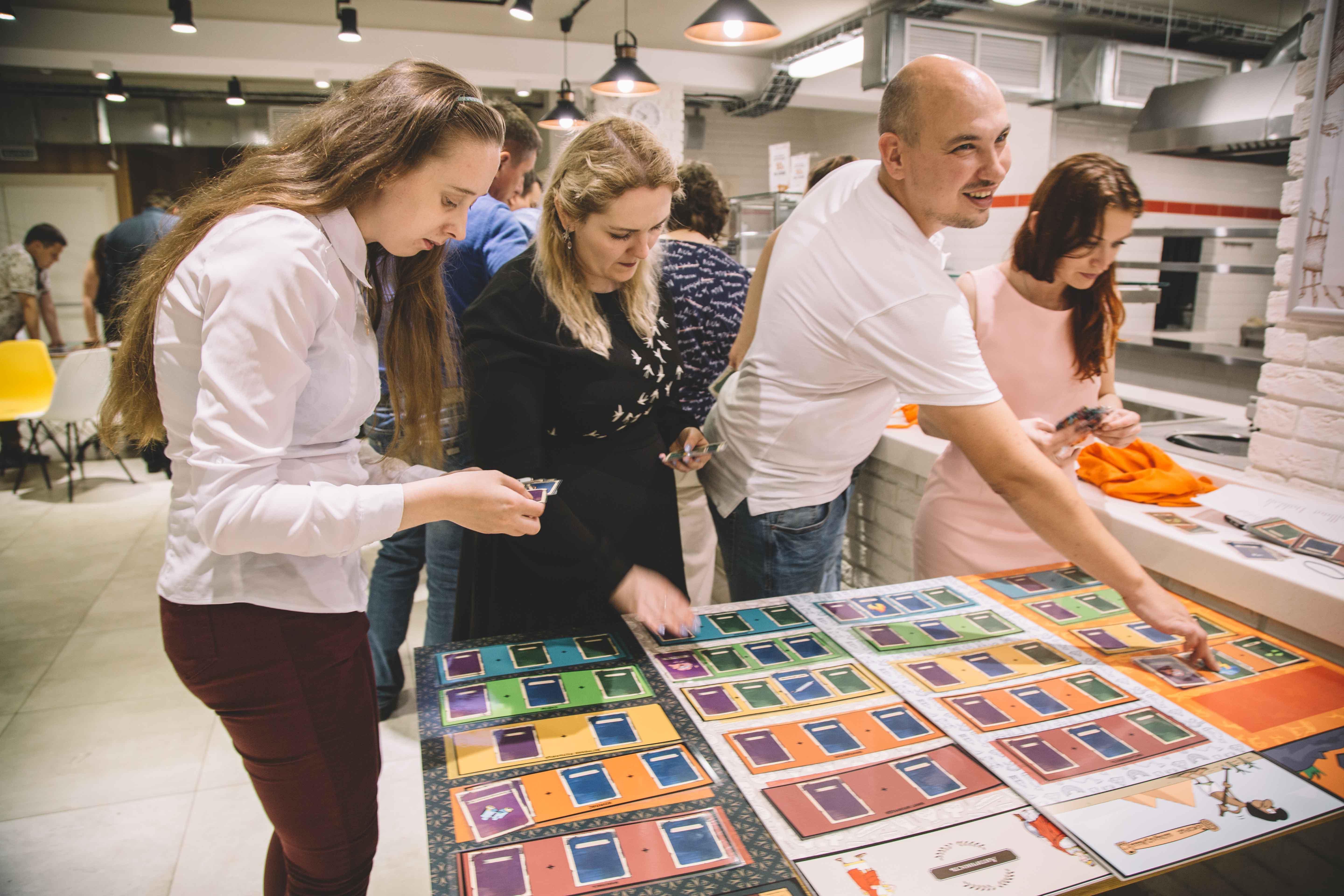
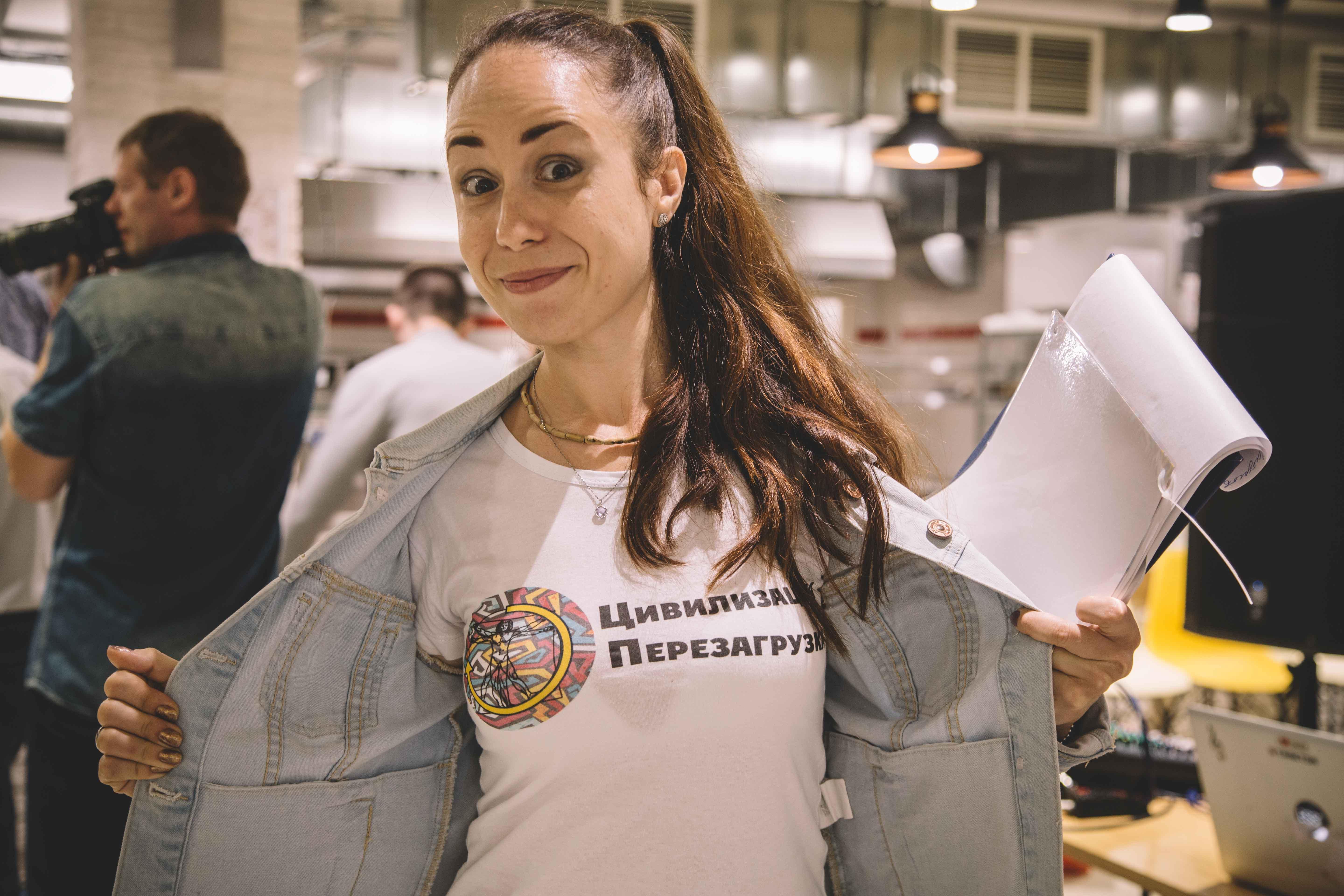
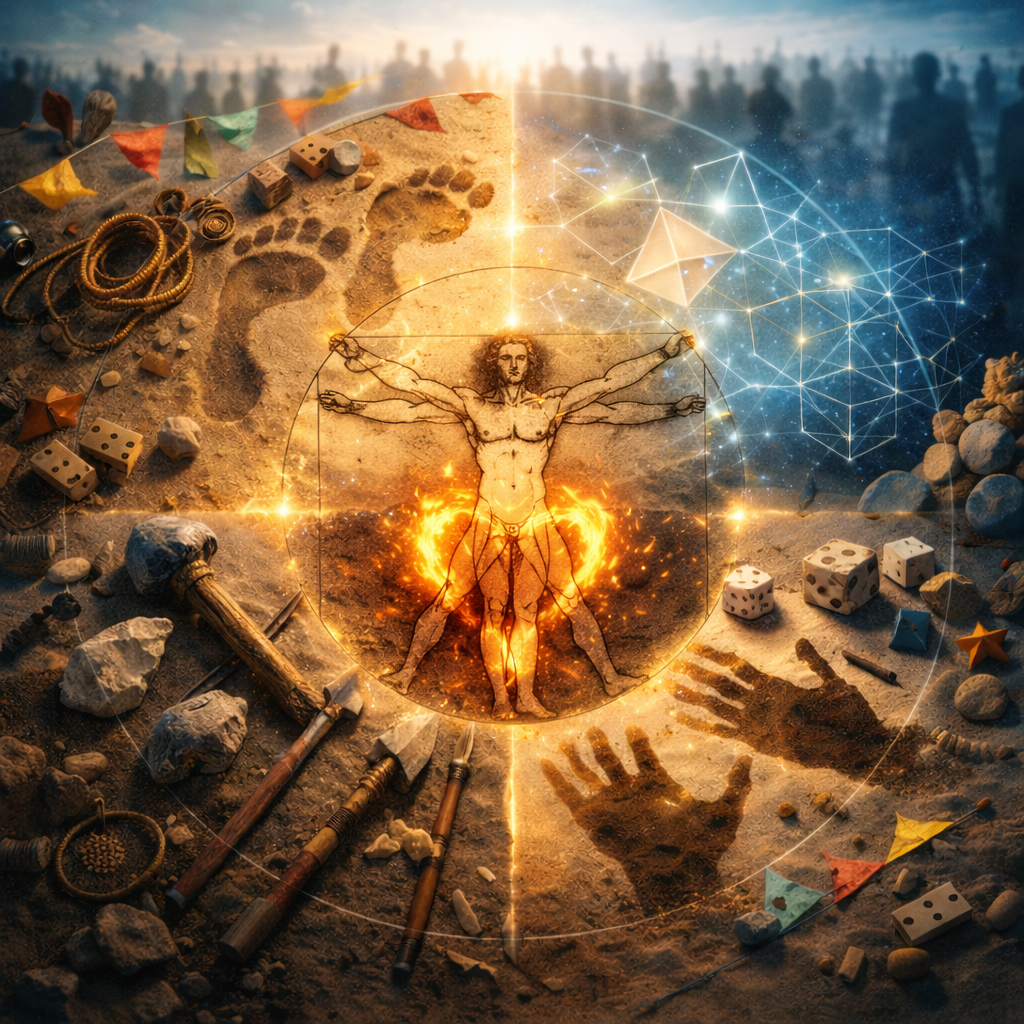
“Eureka!” — this is the first signal that players have entered the game “Civilization Restart”. What follows is a journey through different eras, filled with challenges, discoveries, and competition. With the help of a specially created Time Traveler’s Instagram, teams learn which discoveries are required to move on to the next stage of development. Each discovery is a formula whose elements must be collected at stations and on the game field. The game encourages both team bonding and interaction between teams — sometimes through competition, sometimes through cooperation. The symbol of the game is Leonardo da Vinci’s Vitruvian Man, reminding us that civilization evolves when people evolve. That is why the teams’ journey includes four development stations: Legs, Heart, Hands, and Head.
Station “Legs”
Energetic relays, movement-based challenges, and team bonding. This is the starting point of the game, energising teams for the journey ahead.
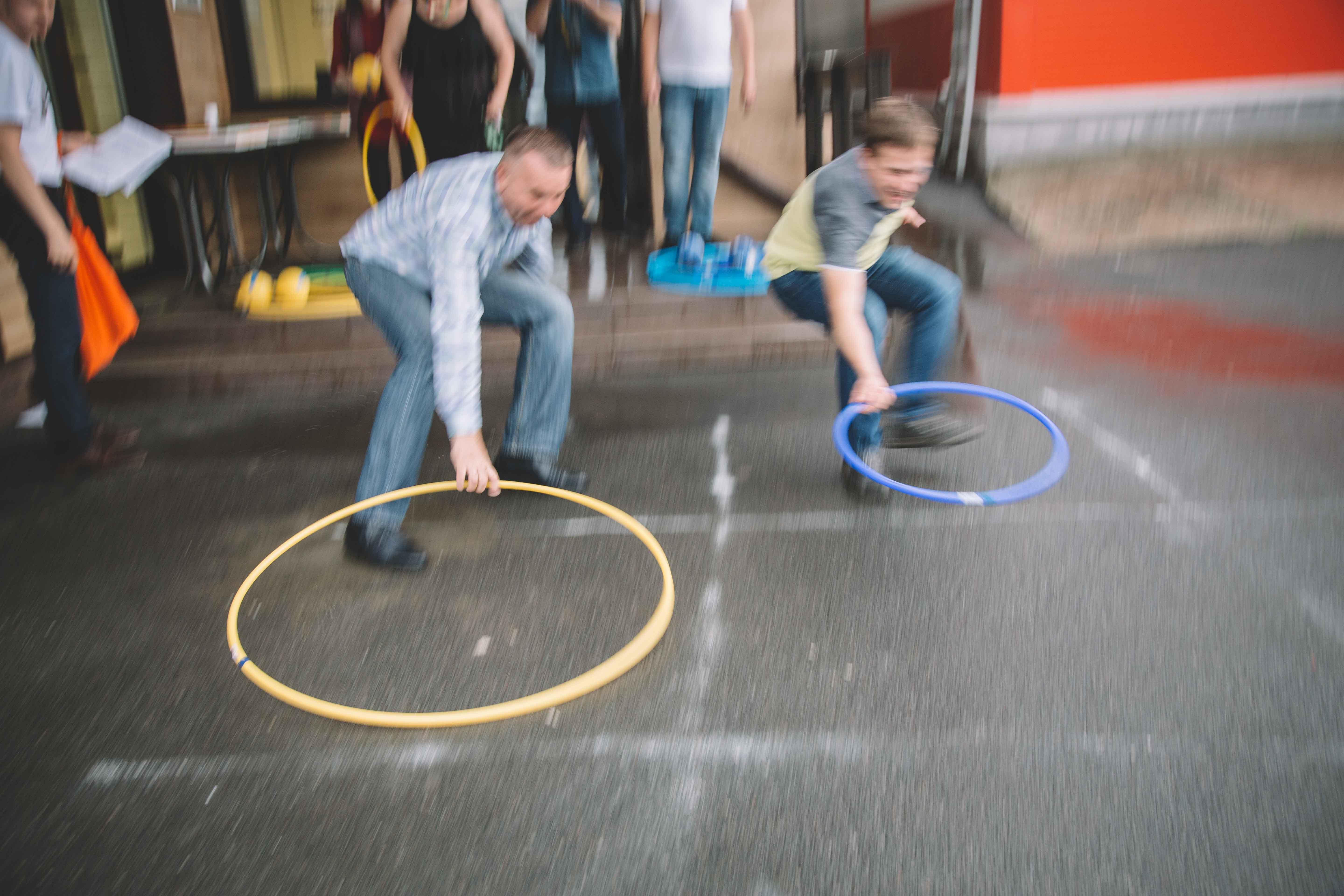
Example challenge: Sports Domino. A player runs to a mound of overturned domino tiles, selects one, and adds it to the team’s combination. The winning team is the one whose remaining tiles have the lowest total score.
Station “Heart”
Tasks focused on empathy, collaboration, and co-creation.
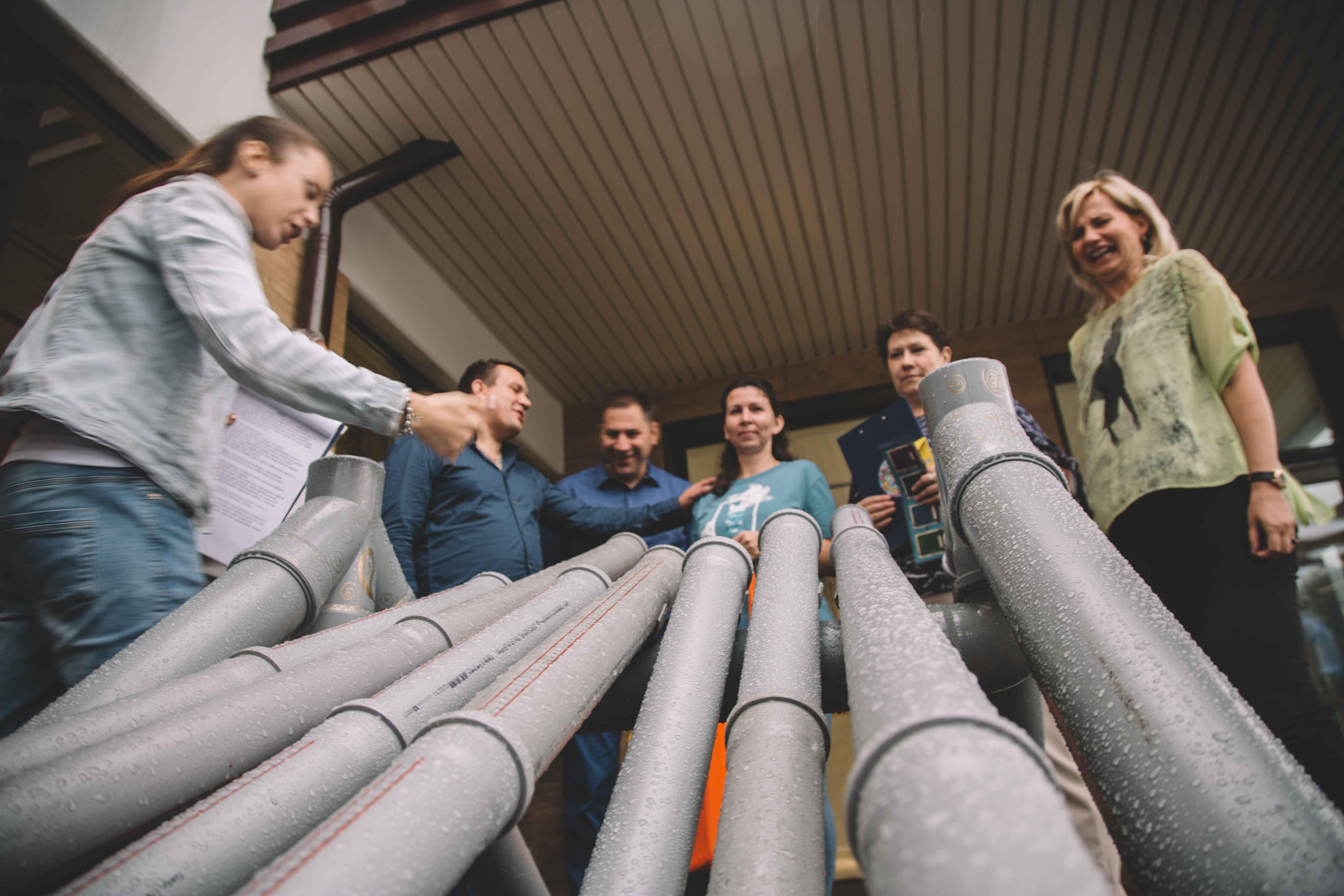
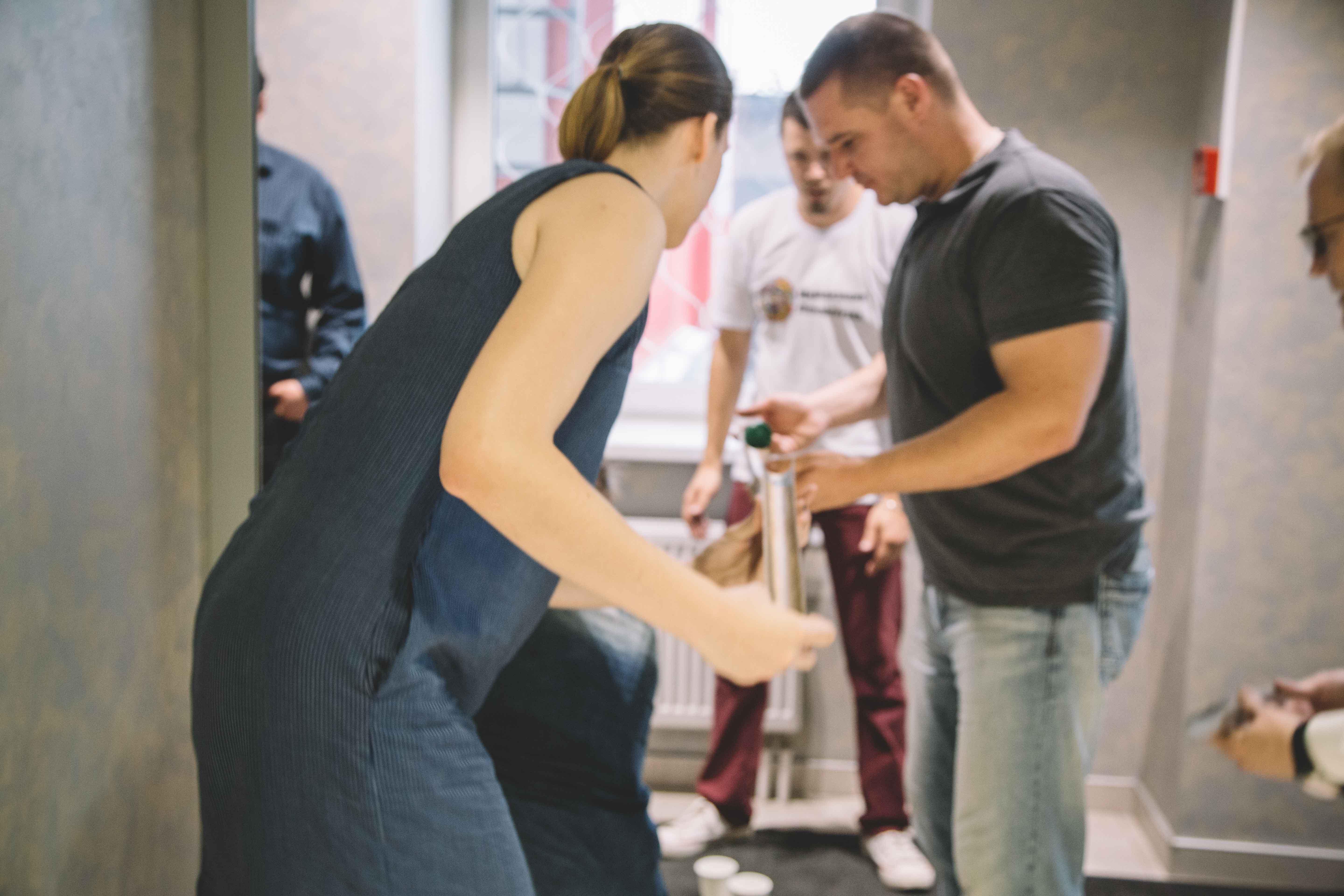
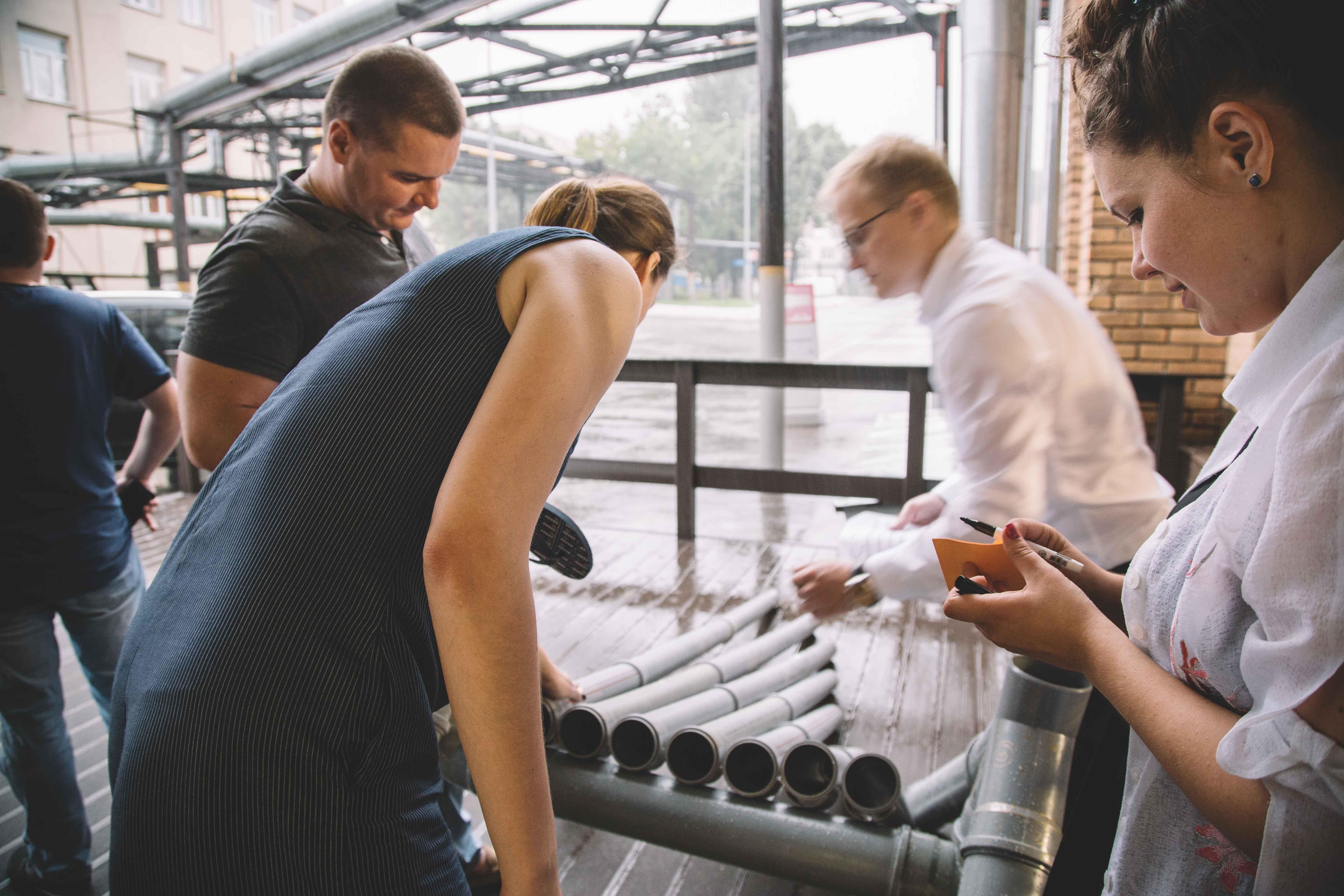
Example challenge: The Musical Pipe Orchestra. One half of the team receives “instruments” made from drainage pipes and a set of musical notes. They must tune the pipes, learn the rhythm (no one may strike twice in a row), and perform the melody for the other half of the team, who must recognise it. Meanwhile, the rest create a visual artwork. Roles are then switched so everyone experiences both musical and visual creativity.
Station “Hands”
Challenges testing quick reactions, logic, and creative problem-solving.
Example challenge: The Word Speed Game. Each player receives two letter tiles. The host asks a question, and the team must not only find the correct answer but also assemble it as quickly as possible using the available letters.
Station “Head”
An era where understanding, communication, and strategy are put to the test.
The team is divided into four groups: priests, warriors, rulers, and farmers. Each group receives its own mission and must exchange important messages. In the first round, messages are created using hieroglyphs; in the second, using emojis. In the final round, each group presents a symbolic performance: priests dance, warriors form a formation, farmers “yoke” the largest ox, and rulers do nothing.
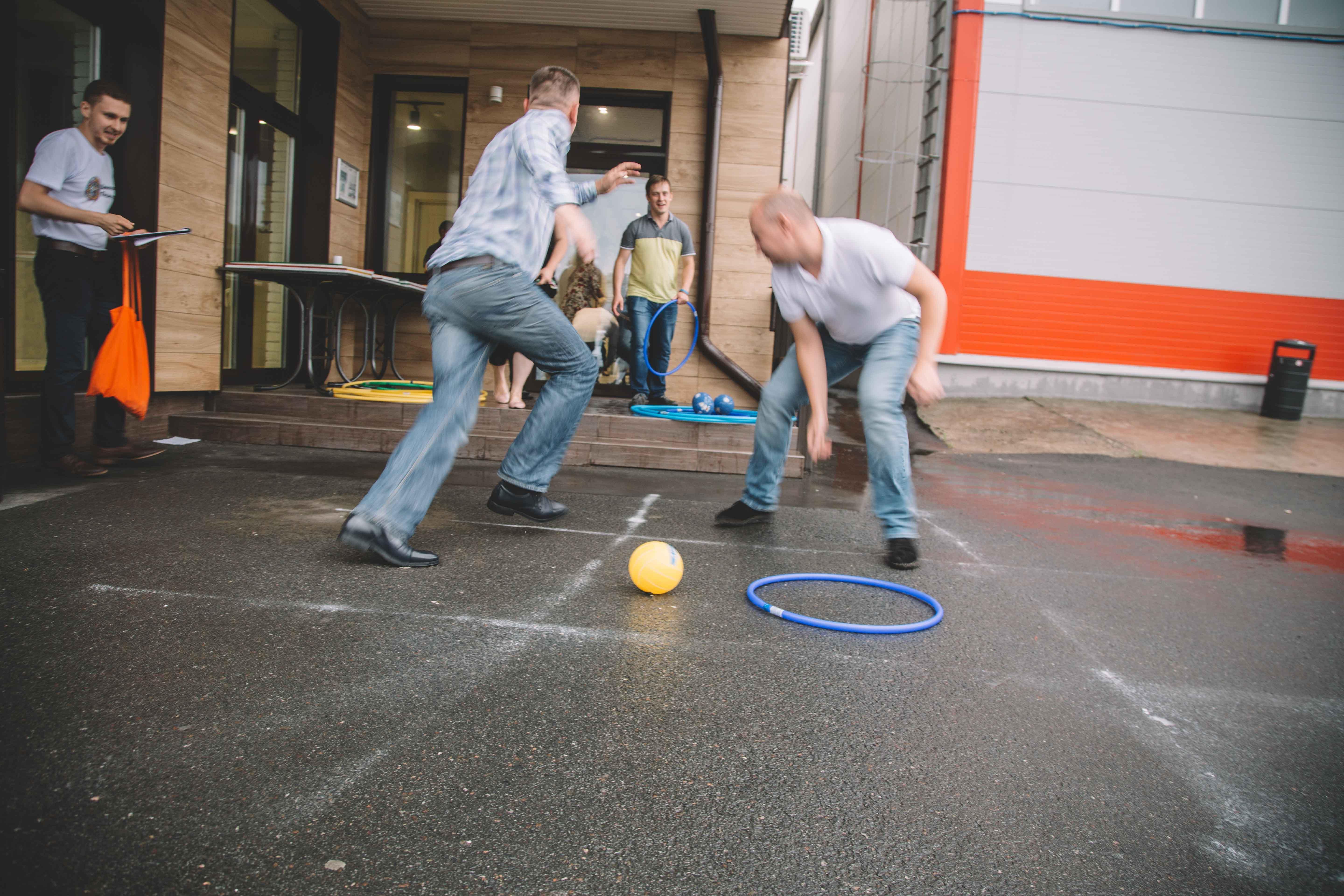
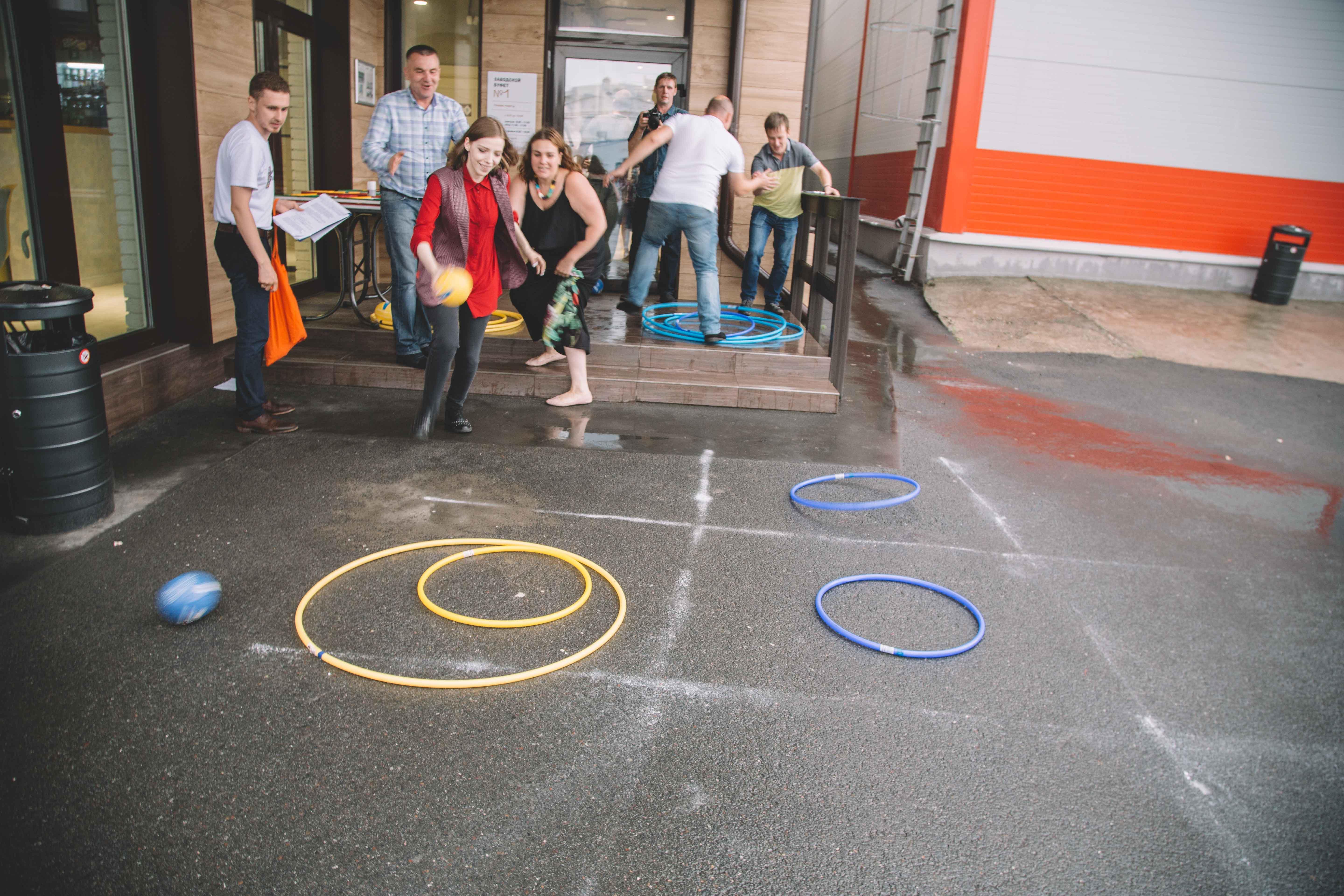
After each station, teams move to the game field to collect resources. This is where the most playful part of the game takes place — the “Hvatun Battle”. Team captains roll large dice, while blindfolded “hvatuns” attempt to grab the correct die based on instructions from their teammates. This activity is ideal for outdoor settings; indoors, a more compact but equally dynamic version is used.
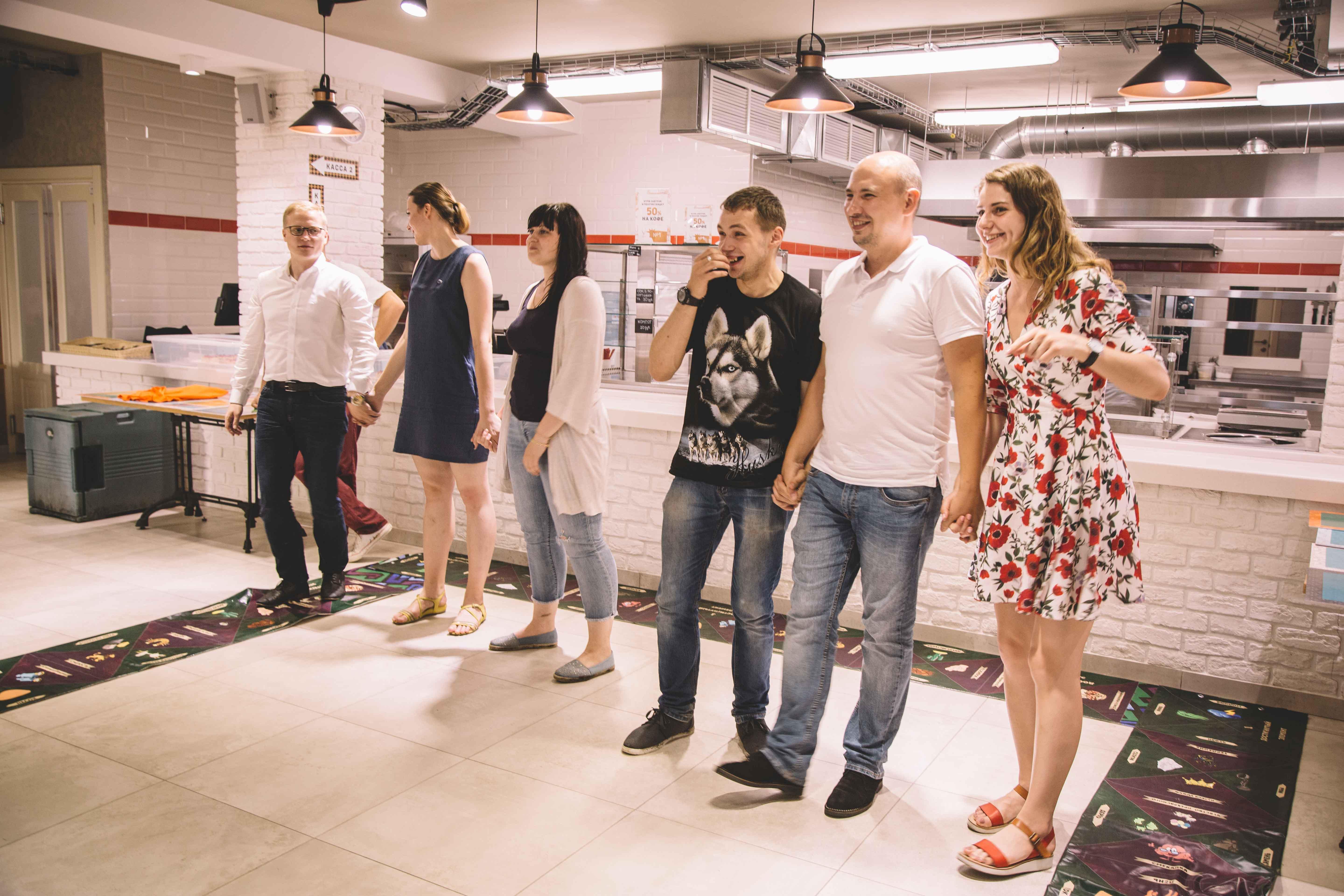
Teams receive resources, may trade them with other teams, complete formulas, and progress to the next era. Each conquered era is marked by an era flag — a symbol of pride and a perfect photo moment.
Finale
The game concludes with the challenge “Truth or Lies”. The host reads out a statement, and the team must quickly decide whether it is true. The answer is shown using umbrellas: green for truth, red for lies.
There may be multiple winners in the game:
• the most developed team
• the team with the highest score
• creative awards — the most epic, the most unconventional, and a special Einstein Prize
The closing speech reminds us: what matters most is not which era we reach, but with whom we share it — even if they are fellow tribe members.
| Time and place of event | A journey through different eras |
| Atmosphere | It’s like hunting a mammoth — only more fun. |
| Number of participants | 30-200 |
| Age of players | 16+ |
| Associations | Task-based strategy |
Interactive Team Game “Civilization Restart”